
Istanbul, Turkey
The only city in the world that spans two continents — Istanbul is a metropolis of extraordinary historical depth, cultural richness, and growing commercial significance, offering professionals a training destination that is simultaneously rooted in millennia of civilisation and firmly oriented towards the future.
WHY ISTANBUL
Where East meets West
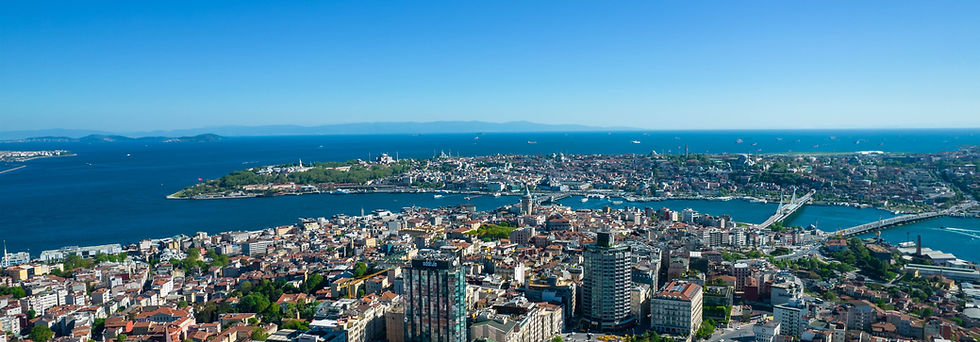
Istanbul occupies a unique position in the world — geographically, culturally, and commercially. Straddling Europe and Asia across the Bosphorus strait, it serves as a natural bridge between the GCC, Africa, and European markets. As Turkey's economic powerhouse, Istanbul hosts the headquarters of major regional banks, energy companies, and professional services firms, whilst its deep cultural heritage and exceptional hospitality make it one of the most welcoming and familiar training destinations for delegates from across the world.
Regional economic powerhouse
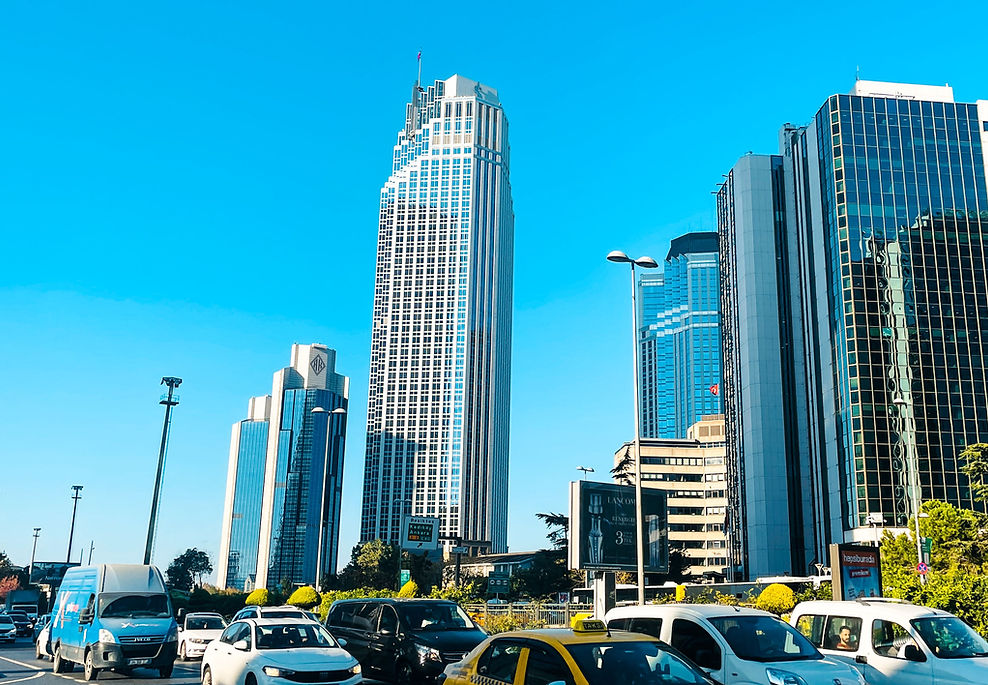
Turkey's largest city and economic capital — headquarters to major regional banks, energy firms, and manufacturing conglomerates, with a GDP exceeding that of many European nations.
Bridge between continents
The only city spanning two continents. Istanbul's unique position makes it a natural meeting point for professionals from Europe,the Middle East, Africa, and Central Asia.
Exceptional connectivity
Istanbul Airport (IST) is one of the world's largest, with direct flights from Riyadh, Dubai, Doha, Nairobi, Accra, Lagos, Abuja, and virtually every African and GCC city via Turkish Airlines.
Outstanding value
Istanbul offers premium hotels, world-class venues, and exceptional cuisine at a significantly lower cost than comparable European destinations — excellent value for organisations and delegates alike.
CULTURE & ATTRACTIONS
Beyond the classroom
Istanbul is one of the great cities of human history — a place where Roman, Byzantine, Ottoman, and modern Turkish civilisations have left their mark in extraordinary monuments, museums, and living cultural traditions. After training hours, delegates will find a city of inexhaustible richness and beauty.
Attraction
What to expect
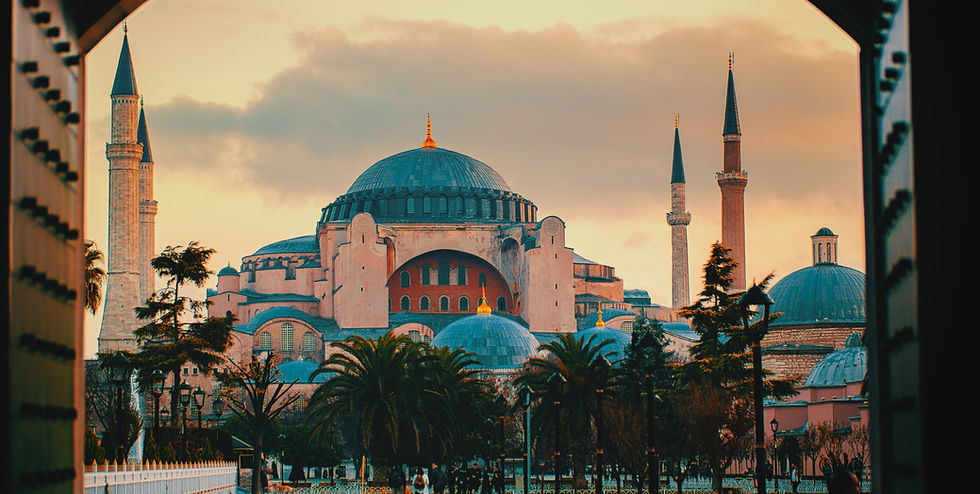
Hagia Sophia
One of the most significant architectural monuments in human history — built as a Byzantine cathedral in 537 AD, converted to a mosque under the Ottomans, and restored as a mosque in 2020. A UNESCO World Heritage Site of incomparable grandeur.
Blue Mosque (Sultan
Ahmed Mosque)
The iconic six-minareted mosque that defines the Istanbul skyline. Built between 1609 and 1616, its extraordinary interior of 20,000 hand-painted Iznik tiles is one of the most beautiful spaces in the world.
Topkapi Palace
The administrative centre of the Ottoman Empire for four centuries. The palace complex houses the Imperial Treasury, the Sacred Relics collection, and extraordinary collections of Ottoman art and artefacts — a UNESCO World Heritage Site.
Grand Bazaar (Kapalicarsi)
One of the world's oldest and largest covered markets — 61 streets, over 4,000 shops, and centuries of trading history beneath vaulted Ottoman ceilings. An extraordinary cultural and commercial experience.
Bosphorus cruise
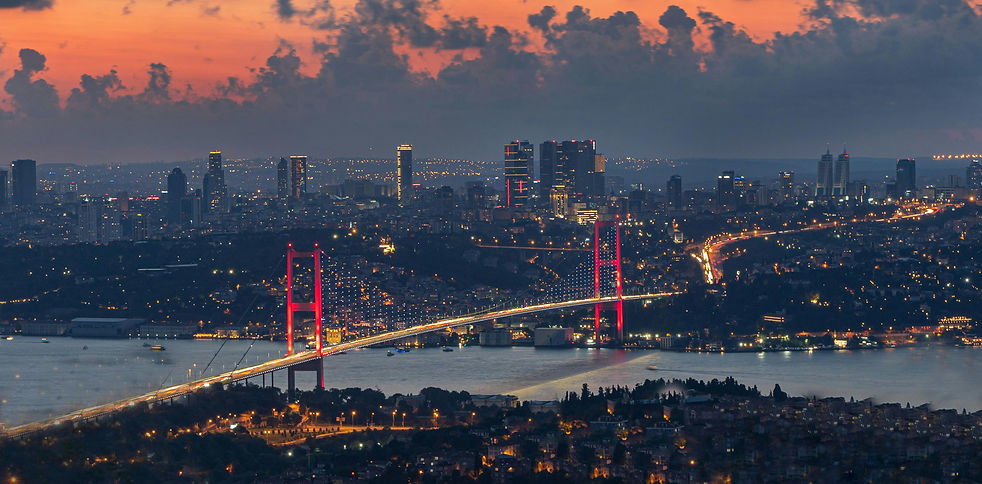
A boat cruise along the Bosphorus strait separating Europe and Asia offers one of the most spectacular urban waterway experiences in the world — passing Ottoman palaces, ancient fortresses, and elegant waterfront mansions.
Istanbul Archaeological
Museums
One of the world's great archaeological collections — housing the Alexander Sarcophagus, the Treaty of Kadesh (the world's oldest peace treaty), and over one million artefacts spanning human civilisation.
Galata & Beyoglu
Istanbul's most vibrant modern district — the medieval Galata Tower, the historic Istiklal Avenue, and a thriving arts, music, and culinary scene reflecting the energy of contemporary Turkish urban life.
Spice Bazaar (Misir
Carsisi)
Istanbul's celebrated spice market, established in 1664 — a sensory immersion of colour, fragrance, and flavour at the edge of the Golden Horn. One of the most atmospheric markets in any city in the world.
WEATHER
What to expect throughout the year
Istanbul has a temperate climate with four distinct seasons. Summers are warm and sunny; winters are cool and occasionally wet, with rare snowfall. Spring and autumn are particularly pleasant for combining professional training with city exploration.
Season
Temperature
Notes
Notes
Spring (Mar–May)
8°C – 20°C
Mild and brightening. Tulip festival in April. Excellent conditions for exploring the historic districts on foot.
Summer (Jun–Aug)
18°C – 30°C
Warm and sunny. Busy with visitors. Long, lively evenings along the Bosphorus waterfront.
Autumn (Sep–Nov)
10°C – 22°C
Crisp and pleasant. Fewer tourists. One of the finest and most agreeable seasons to visit Istanbul.
Winter (Dec–Feb)
3°C – 10°C
Cool and occasionally wet. Rare snowfall. Atmospheric and uncrowded — a peaceful time to visit.
Dress Code Guidance
Recommended Attire
Context
Training sessions
Smart business or casual attire. Istanbul's professional culture is formal — delegates are encouraged to dress smartly. Venues are well air-conditioned in summer and heated in winter.
Outdoor exploration
Comfortable walking shoes with good grip are strongly recommended — Istanbul's historic districts involve uneven cobbled surfaces and steep hills. A light jacket is advisable in spring and autumn; a warm coat is essential in winter. Modest dress is respectful when visiting mosques.
GETTING AROUND
Navigating the city
Istanbul is a large and dynamic city spread across two continents. Its public transport network — comprising Metro, tram, funicular, and ferry lines — covers the major areas efficiently. The Istanbulkart travel card is the most convenient payment method across all modes of transport.
Mode
Deatils
Metro and tram
network
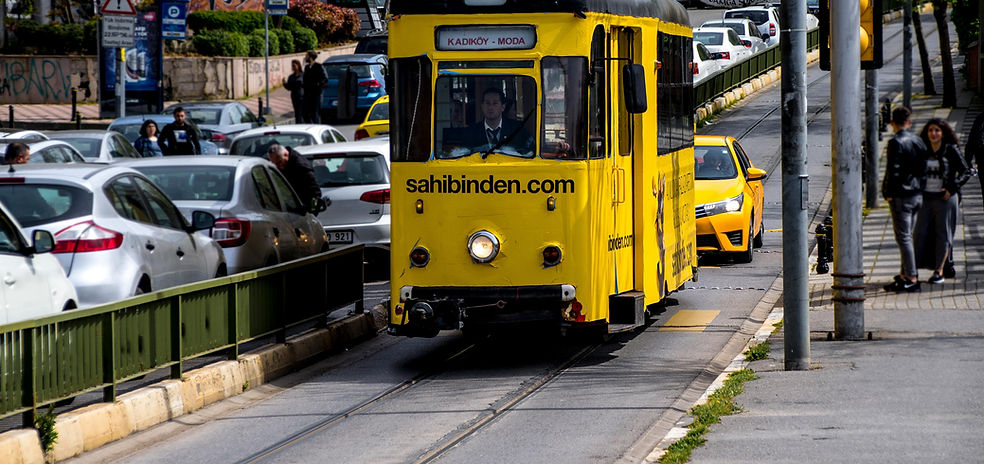
Istanbul's expanding Metro network covers key districts across both the European and Asian sides. The historic T1 tram line runs through Sultanahmet and along Istiklal Avenue — the most useful single route for delegates in the historic centre. An Istanbulkart travel card is accepted across all Metro, tram, funicular, and ferry services.
Airport connections
Istanbul Airport (IST) is approximately 35-50 kilometres from the city centre. The M11 Metro line connects the airport to Gayrettepe station in approximately 35 minutes. Taxis and private transfers are also available and take approximately 45-75 minutes to central Istanbul depending on traffic.
Bosphorus ferries
Regular ferry services cross the Bosphorus between the European and Asian sides, connecting Eminonu, Besiktas, and Kadikoy. Ferries accept the Istanbulkart and offer a uniquely memorable commuting experience with views of the city's iconic skyline.
Taxis & ride-hailing
Yellow metered taxis are widely available. BiTaksi and Uber also operate in the city. Delegates are advised to use the BiTaksi app or request taxis through their hotel. Traffic in central Istanbul can be very heavy during peak hours — public transport is usually faster.
Walking
The Sultanahmet historic district, Beyoglu, and the Galata area are all walkable, though Istanbul's hilly terrain and uneven cobbled streets make comfortable footwear essential. The T1 tram complements walking well for covering longer distances within the historic centre.
PRACTICAL INFORMATION
Before you arrive
Key practical details to help delegates from across the GCC, Africa, and Asia prepare for a comfortable and productive visit to Istanbul.
Topic
Information
Currency
Turkish Lira (TRY). Card and contactless payments are widely accepted at hotels, restaurants, and most shops. Carrying a modest amount of local currency is advisable for markets, smaller establishments, and transport. ATMs are available throughout the city and at Istanbul Airport.
Time Zone
TRT (UTC+3) year-round — Turkey does not observe daylight saving time. Istanbul is on the same time as Riyadh and Nairobi in winter. It is 1 hour behind Dubai, and 3 hours ahead of London in winter.
Electricity
Type C and F plugs (two round pins), 230V / 50Hz. Delegates from the GCC, Africa, and Asia will require a European travel adaptor. Available at Istanbul Airport and throughout the city. Delegates from the UK will also require an adaptor.
Halal Dining
As a majority-Muslim city, halal food is the standard across virtually all of Istanbul's restaurants and food establishments. The city's cuisine — from traditional Turkish kebabs and mezes to international options — is widely considered among the finest in the world and is almost universally halal-certified.
Places of Worship
Istanbul has thousands of mosques — including the Hagia Sophia, Blue Mosque, and Suleymaniye Mosque, all within walking distance in Sultanahmet. A Qibla direction indicator is available on request at most international hotels. Muslim delegates are advised that the Muslim Pro app provides accurate prayer times and Qibla direction worldwide. Christian delegates are also well served — Istanbul has numerous historic churches and active congregations, including the Ecumenical Patriarchate of Constantinople.
Language
Turkish is the official language. English is widely spoken in hotels, business settings, and tourist areas across central Istanbul. All training courses are delivered in English. Basic Turkish phrases such as Tesekkkur ederim (thank you) and Merhaba (hello) are warmly received by locals.
Ready to train in Istanbul ?
Browse our full programme of courses and reserve your place today.
