
Manama, Bahrain
The Gulf's most open and internationally connected financial centre — Manama is a city of remarkable accessibility, a long history of commercial and cultural exchange, and a growing reputation as one of the most business-friendly and welcoming destinations in the Gulf region for international professionals from Africa, Asia, and beyond.
WHY MANAMA
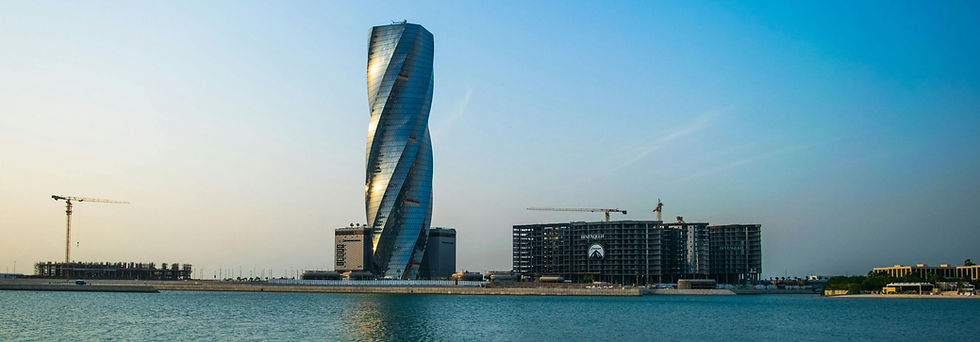
The Gulf's most open financial centre
Manama is the capital of Bahrain — one of the Gulf's smallest but most economically sophisticated nations, with a financial services sector of regional significance, a highly educated and internationally minded professional community, and a regulatory environment consistently ranked among the most transparent and business-friendly in the Middle East. For professionals from across Africa, the GCC, and South Asia, Manama offers a Gulf training experience that is distinctly more accessible, more cosmopolitan, and more open in character than many of its larger neighbours — a city where international professionals are welcomed without reservation and where the quality of training infrastructure matches the ambition of its financial sector aspirations.
Gulf financial hub
Home to the Bahrain Financial Harbour, the Central Bank of Bahrain, and the regional headquarters of major international banks, Islamic finance institutions, and professional services firms — a financial centre of genuine Gulf-wide significance.
Excellent connectivity
Bahrain International Airport (BAH) offers direct flights from Dubai, Riyadh, Doha, Nairobi, Lagos, Mumbai, and major African and GCC cities via Gulf Air and international carriers. The King Fahd Causeway connects Bahrain directly to Saudi Arabia.
Islamic finance capital
Bahrain is widely regarded as the global capital of Islamic finance — home to the Accounting and Auditing Organisation for Islamic Financial Institutions (AAOIFI) and a world-leading concentration of Islamic bankingand finance expertise.
Most accessible Gulf destination
Bahrain offers one of the most liberal entry policies in the Gulf — visa on arrival or e-visa for nationals of most countries. Combined with its compact size, English language environment, and welcoming culture, Manama is the most immediately accessible Gulf training destination for delegates from Africa and Asia.
CULTURE & ATTRACTIONS
Beyond the classroom
Manama rewards exploration with a distinctive blend of ancient Dilmun civilisation heritage, pearl diving history, vibrant contemporary arts, and the unique character of a small Gulf island nation that has always looked outward to the world.
Attraction
What to expect
Bahrain National Museum
The finest museum in Bahrain — tracing 6,000 years of Bahraini history from the ancient Dilmun civilisation through the Islamic era to the present day. Outstanding collections of archaeological finds, traditional crafts, and pearl diving heritage. One of the best national museums in the Gulf.
Al-Fateh Grand Mosque
One of the largest mosques in the world, accommodating up to 7,000 worshippers — built from fibreglass and marble, with a magnificent dome made from the world's largest fibreglass structure. Open to non-Muslim visitors with guided tours available. A profoundly impressive architectural and spiritual landmark
Bahrain Fort (Qal'at al-
Bahrain)
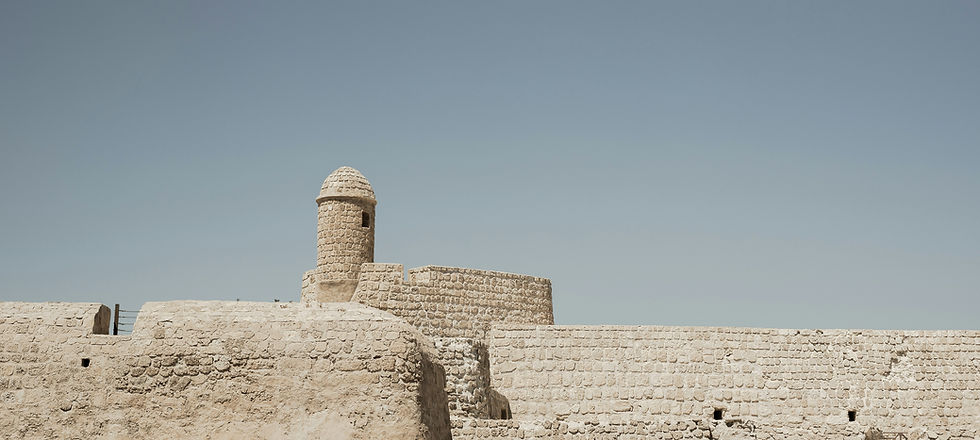
A UNESCO World Heritage Site — a 4,000-year-old archaeological site on the northern coast of Bahrain, built on the site of the ancient Dilmun capital. The excavated layers reveal 4,000 years of continuous human occupation and the extraordinary depth of Bahraini civilisation.
Manama Souq & Gold
Market
The historic commercial heart of Manama — a vibrant traditional market of gold, spices, textiles, and everyday goods that has been trading continuously for centuries. One of the most authentic and accessible traditional souq experiences in the Gulf.
Bab Al Bahrain & Heritage
Area
The historic gateway to the old Manama souq — a beautifully restored 1945 building that serves as the entrance to the heritage commercial district. The surrounding area of traditional courtyard houses and historic merchants' buildings reflects the authentic character of pre-oil Manama.
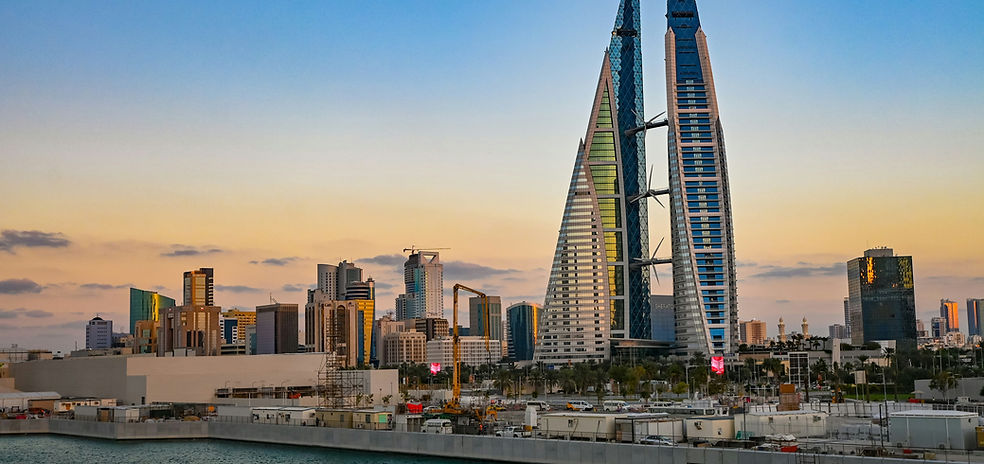
Bahrain Financial Harbour
& Waterfront
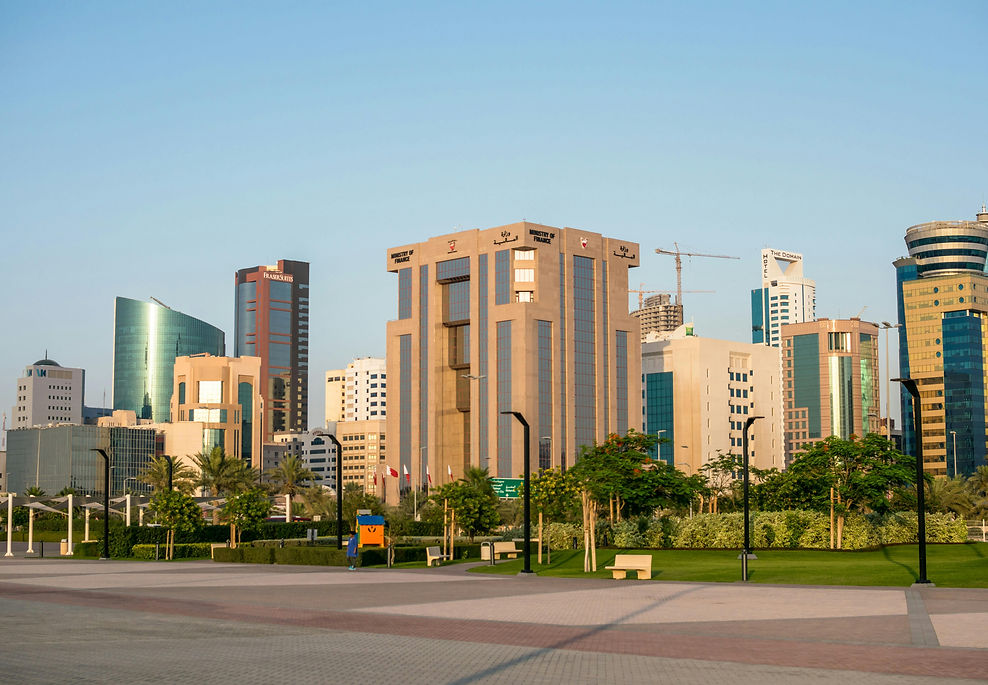
Manama's contemporary financial district — twin towers rising from a striking waterfront development that signals Bahrain's ambitions as a modern Gulf financial centre. The Harbour promenade is a pleasant evening destination with views across the Arabian Gulf.
Tree of Life (excursion)
Approximately 40 kilometres south of Manama — a 400-year-old mesquite tree growing alone in the barren desert, with no apparent water source. One of Bahrain's most mysterious and visited natural landmarks, surrounded by ancient archaeological sites.
Muharraq & Pearl Road
(excursion)
The historic island of Muharraq — connected to Manama by causeway — is a UNESCO World Heritage Site. The Pearl Route traces the traditional pearl diving heritage that made Bahrain famous across the world for over 2,000 years, through a series of beautifully restored historic buildings and merchant houses.
WEATHER
What to expect throughout the year
Manama has a hot desert climate — warm and humid year-round given its island location on the Arabian Gulf. The cooler months from November to March offer the most comfortable conditions for training and outdoor exploration. Summers are very hot and humid but all venues are fully air-conditioned year-round.
Season
Temperature
Notes
Winter (Nov-Mar)
14C - 24C
Warm and pleasant. The finest season for training and outdoor exploration. The most comfortable and agreeable time to visit Manama.
Spring (Apr-May)
22C - 34C
Warming and increasingly humid. Still manageable in the mornings and evenings. A reasonable shoulder season for training visits.
Summer (Jun-Sep)
30C - 42C
Very hot and humid. All venues fully air-conditioned. Outdoor activity limited to early morning and evening hours.
Autumn (Oct)
26C - 36C
Cooling gradually. Very pleasant conditions return by late October. A good transitional period for training visits.
Dress Code Guidance
Context
Recommended Attire
Training sessions
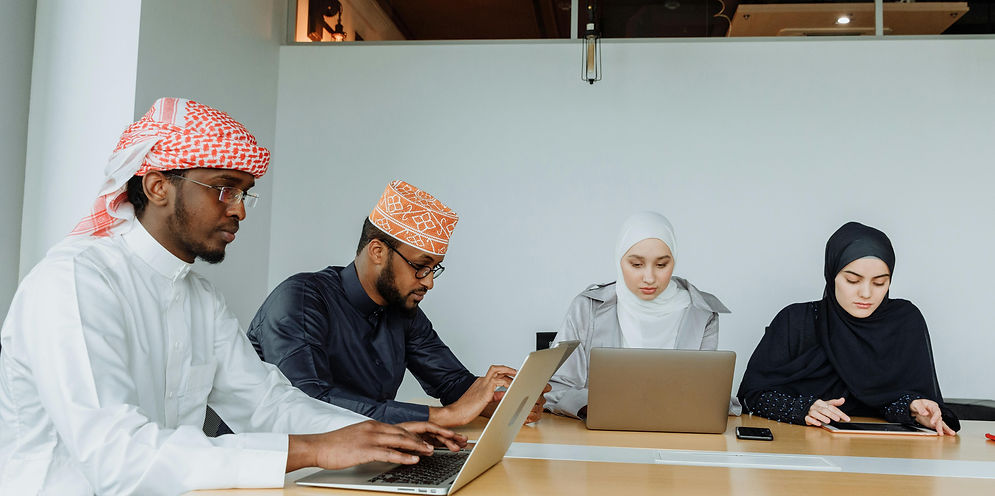
Smart business or business casual attire. Manama's professional culture — particularly in financial services settings — is smart and internationally minded. Venues are strongly air-conditioned; a light layer is advisable for indoor sessions throughout the year.
Outdoor exploration
Light, breathable clothing recommended outside the cooler winter months. Modest dress is respectful throughout the city and particularly important when visiting mosques. Comfortable footwear essential. Sun protection strongly advisable year-round.
GETTING AROUND
Navigating the city
Manama is a compact, car-oriented city that is straightforward to navigate. Taxis and ride-hailing are the most practical options for delegates, and the city's small size means most training venues, hotels, and key attractions are within short journey times of each other.
Mode
Deatils
Taxis & ride-hailing
Uber and Careem both operate in Manama and are the most practical options for delegates. Metered taxis are also available at major hotels and the airport. Ride-hailing is strongly recommended for convenience, reliability, and fixed pricing across Manama's compact layout.
Airport connections
Bahrain International Airport (BAH) is located on the northern tip of Muharraq Island, approximately 9 kilometres from central Manama — a journey of approximately 15-25 minutes by taxi or Uber. The airport has recently been expanded and is modern and well-organised. Private transfer services are available from all major hotels.
Car hire
Car hire is widely available at the airport and from established operators throughout the city. Recommended for delegates wishing to visit the Bahrain Fort, the Tree of Life, or explore the island and its southern districts independently. All major international hire companies are represented at Bahrain Airport. Driving is on the right-hand side of the road.
King Fahd Causeway to
Saudi Arabia
The King Fahd Causeway connects Bahrain to Al Khobar in Saudi Arabia — a journey of approximately 45-60 minutes from central Manama. A practical option for delegates attending training in both Bahrain and the Eastern Province of Saudi Arabia.
Walking
The Manama Souq, Bab Al Bahrain heritage area, and the Bahrain Financial Harbour waterfront are pleasant to explore on foot during the cooler months. During summer, outdoor walking during daytime hours is not advisable. The souq area is most rewarding to explore in the early evening year-round.
PRACTICAL INFORMATION
Before you arrive
Key practical details to help delegates from across Africa, the GCC, and Asia prepare for a comfortable and productive visit to Manama.
Topic
Information
Currency
Bahraini Dinar (BHD) — one of the highest-valued currencies in the world. Card and contactless payments are widely accepted at hotels, shopping centres, and most restaurants. ATMs are available at the airport, major hotels, and throughout the city centre.
Time Zone
AST (UTC+3) year-round. Manama is on the same time as Riyadh, Doha, and Nairobi. It is 1 hour behind Dubai, and 3 hours ahead of London in winter.
Electricity
Type G plug (three rectangular pins — same as the United Kingdom), 230V / 50Hz. Delegates from the UK will find their plugs fully compatible. GCC and most Asian delegates will require a UK-style adaptor. Available at Bahrain Airport and throughout the city.
Halal Dining
As a Muslim-majority city, halal food is the standard across virtually all of Manama's restaurants. Bahrain's culinary scene is diverse for a Gulf city — traditional Bahraini, Arabic, South Asian, and international cuisines are all widely available. Manama is generally considered to have one of the most varied and cosmopolitan dining scenes in the Gulf.
Cultural
Considerations
Manama is one of the most open and cosmopolitan cities in the Gulf. Modest dress is respectful throughout the city. During Ramadan, eating and drinking in public during daylight hours should be avoided. Friday and Saturday are the weekend; business generally runs Sunday through Thursday.
Ready to train in Manama?
Browse our full programme of courses and reserve your place today.
