
Seoul, South Korea
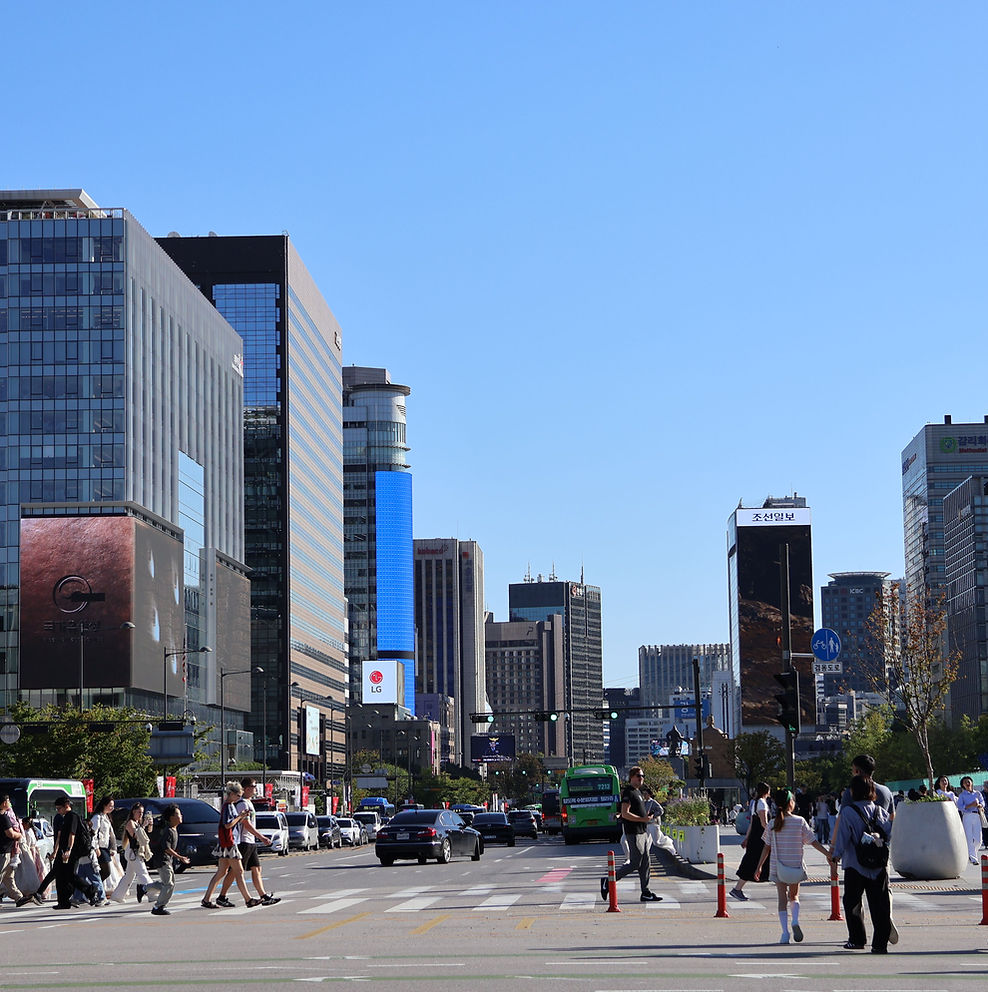
One of Asia's most dynamic and technologically advanced cities — Seoul seamlessly blends a 600-year-old royal heritage with a cutting-edge innovation economy, offering professionals a training environment that is simultaneously deeply rooted in history and unmistakably oriented towards the future.

WHY SEOUL
Asia's innovation capital
Seoul is home to some of the world's most recognised technology and industrial conglomerates, and consistently ranks among Asia's top cities for innovation, digital infrastructure, and business competitiveness. For professionals from the GCC, Africa, and across globe, Seoul offers a training experience of exceptional quality — a city where the principles of rapid transformation, institutional capability building, and technology-driven development are not merely discussed in training rooms but are visibly embedded in the urban fabric of one of the world's most efficiently functioning cities.
Asia's innovation powerhouse
Headquarters of globally recognised technology and industrial conglomerates, a world-leading semiconductor and electronics industry, and one of Asia's most sophisticated financial services sectors.
Well Connected
Incheon International Airport (ICN) — consistently rated among the world's best — offers direct or one-stop connections from Dubai, Riyadh, Doha, Nairobi, Lagos, Accra, and major African and GCC cities.
World's fastest internet
South Korea has the world's fastest and most pervasive broadband infrastructure. Seoul's digital connectivity is unrivalled — a practically relevant advantage for technology and data-intensive training programmes.
Exceptionally safe
Consistently ranked among the world's safest cities. Delegates can navigate Seoul independently with complete confidence at any hour — a particularly reassuring quality for first-time visitors from any background.
CULTURE & ATTRACTIONS
Beyond the classroom
Seoul is a city of extraordinary contrasts — ancient palaces and Confucian shrines sit alongside ultra-modern entertainment districts and world-leading technology campuses, creating an after-hours experience of remarkable depth and variety.
Attraction
What to expect
Gyeongbokgung Palace
The largest and most magnificent of Seoul's five Joseon-era royal palaces, built in 1395 and magnificently restored. The changing of the guard ceremony at Gwanghwamun Gate is one of the most colourful and precise ceremonies in Asia.
Bukchon Hanok Village
A preserved neighbourhood of over 900 traditional Korean hanok houses nestled between the royal palaces and Insadong — one of the most photographed and culturally evocative areas in Seoul.
N Seoul Tower
A 480-metre communications tower atop Namsan Mountain offering panoramic views across the entire Seoul basin. Accessible by cable car or hiking trail — a memorable evening destination particularly when illuminated.
Insadong & Bukchon
Seoul's most celebrated cultural district — a maze of traditional teahouses, art galleries, craft shops, and street food stalls. An authentic and vibrant insight into Korean artistic and social culture.
Dongdaemun Design
Plaza (DDP)
Zaha Hadid's extraordinary neo-futurist building — a sweeping, curvilinear structure of aluminium and glass housing design exhibitions, cultural events, and a 24-hour fashion market. One of the most architecturally distinctive buildings in Asia.
National Museum of Korea
One of the world's largest museums — housing over 220,000 artefacts covering Korean history from the Palaeolithic era to the Joseon dynasty, including outstanding collections of celadon pottery and Buddhist sculpture.
Han River Parks
A 40-kilometre linear park system along both banks of the Han River — cycling paths, picnic areas, outdoor cinemas, and a relaxed social atmosphere reflecting the daily leisure culture of contemporary Seoul
DMZ tour (excursion)
The Demilitarised Zone on the border with North Korea is approximately one hour from Seoul — the most heavily fortified border in the world and one of the most thought-provoking geopolitical excursion destinations available from any city in the portfolio.

WEATHER
What to expect throughout the year
Seoul has a continental climate with four well-defined seasons. Spring and autumn are widely considered the most beautiful times to visit — mild temperatures and the spectacular displays of cherry blossoms in April and vivid autumn foliage in October create a backdrop that genuinely enhances the training experience.
Season
Temperature
Notes
Spring (Mar-May)
5°C – 18°C
Cherry blossom season in April. Mild and brightening. One of the finest and most popular seasons to visit Seoul.
Summer (Jun-Aug)
20°C – 33°C
Hot and humid. Monsoon season in July. All venues fully air-conditioned. Book accommodation well in advance.
Autumn (Sep-Nov)
8°C – 22°C
Crisp and clear. Spectacular autumn foliage in October. Excellent conditions for training and city exploration.
Winter (Dec-Feb)
-5°C – 5°C
Cold and dry with occasional snow. All venues fully heated. Clear, bright skies. Fewer tourists.
Dress Code Guidance
Context
Recommended Attire
Training sessions
Smart business or casual attire. Seoul's professional culture is formal and presentation-conscious — delegates are encouraged to dress smartly. Venues are well air-conditioned in summer and comprehensively heated in winter.
City exploration
Comfortable walking shoes are essential — Seoul rewards extensive exploration on foot. Layers advisable in spring and autumn. A warm, windproof coat is necessary from December through February when temperatures regularly drop below freezing. Light clothing in summer.
GETTING AROUND
Navigating the city
Seoul has one of the world's finest urban rail networks — extensive, punctual, clean, and remarkably affordable. The Metro covers virtually every corner of the city and is the primary mode of transport for both residents and visitors. A T-money card or contactless payment is accepted across all Metro, bus, and taxi services.
Mode
Deatils
Seoul Metro
23 lines covering the entire Seoul metropolitan area. Runs approximately 05:30 to midnight daily. Fully air-conditioned, immaculately clean, and well signposted in English. A T-money card — available at all stations and convenience stores — is the most convenient payment method, also accepted on all buses and taxis.
Airport connections
Incheon International Airport (ICN): the AREX Express Train connects directly to Seoul Station in approximately 43 minutes, running every 30 minutes. Taxis and limousine buses are also available at all terminals for delegates with heavy luggage.
Bus network
An extensive colour-coded bus network complements the Metro, covering areas not directly served by rail. Accepts T-money card or contactless payment. Blue trunk buses are most useful for cross-city journeys; green feeder buses connect Metro stations to nearby areas.
Taxis & ride-hailing
(Kakao T)
Seoul taxis are metered, clean, and very affordable. Kakao T is the dominant ride-hailing platform and is strongly recommended. International Taxis (dark grey) have English-speaking drivers and are specifically available for foreign visitors — bookable via the Kakao T app.
Walking
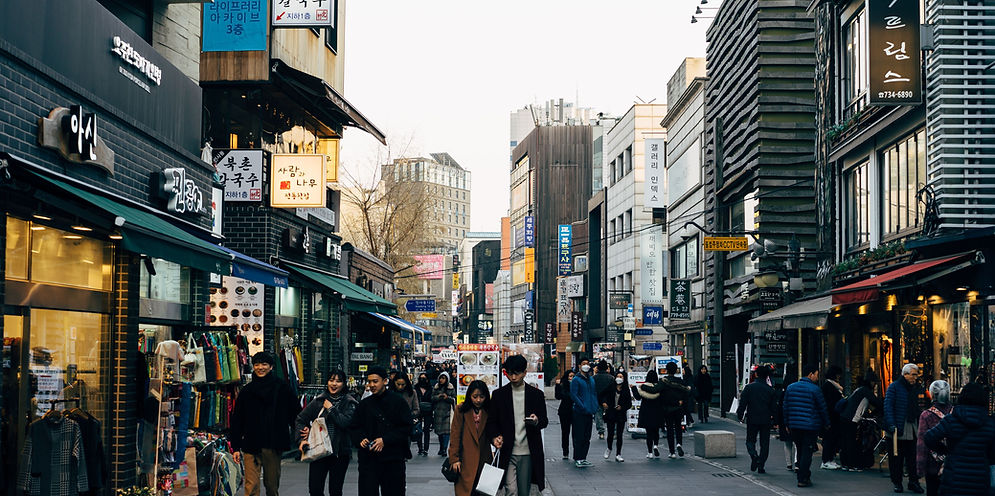
Central Seoul — around Gyeongbokgung, Insadong, Myeongdong, Gangnam, and the Han River — is highly walkable. The Cheonggyecheon Stream, a beautifully restored urban waterway through the heart of the city, provides one of Seoul's most pleasant pedestrian routes.

PRACTICAL INFORMATION
Before you arrive
Key practical details to help delegates from across the GCC, Africa, and Asia prepare for a comfortable and productive visit to Seoul.
Topic
Information
Currency
South Korean Won (KRW). Card and contactless payments are very widely accepted — South Korea is one of the world's most cashless societies. ATMs accepting international cards are available at Incheon Airport, major banks, and convenience stores throughout the city.
Time Zone
KST (UTC+9) year-round. Seoul keeps the same time as Tokyo. It is 6 hours ahead of Riyadh, 5 hours ahead of Dubai, 9 hours ahead of London in winter, and 6 hours ahead of Nairobi.
Electricity
Type C and F plugs (two round pins), 220V / 60Hz. Note that South Korea uses 60Hz frequency, which differs from the European 50Hz standard. Most modern devices are dual-frequency compatible — check device labelling. GCC, African, UK, and most Asian delegates will require a Korean-compatible adaptor.
Halal Dining
Seoul's halal food scene has grown considerably in recent years. Halal-certified restaurants are available in the Itaewon and Mapo districts and are increasingly found near major business hotels and training venues. The Korea Muslim Federation website provides a regularly updated directory of certified establishments.
Places of Worship
The Seoul Central Masjid in Itaewon is the city's principal mosque — a striking building in Seoul's most international district. Christian delegates are exceptionally well served — South Korea has a large Christian population and Seoul has thousands of churches of every denomination throughout the city. A Qibla direction indicator is available on request at most international hotels. Muslim delegates are advised that the Muslim Pro app provides accurate prayer times and Qibla direction worldwide.
Language
Korean is the official language. English is widely spoken in hotels, business settings, and major tourist areas. Metro signage is fully in English throughout the city. All training courses are delivered in English. The Papago translation app is an excellent tool for delegates navigating Korean menus and signs.

Ready to train in Seoul?
Browse our full programme of courses and reserve your place today.
