
Abuja, Nigeria
Nigeria's purpose-built federal capital and the seat of government of Africa's largest nation — Abuja is a city of broad boulevards, ordered planning, significant institutional infrastructure, and a growing professional class, offering professionals from across West and Central Africa a training environment that is distinctly calmer, more manageable, and more institutionally focused than Lagos.

WHY ABUJA
Nigeria's seat of power
Abuja is the political, administrative, and increasingly the institutional training capital of Nigeria — a purpose-built city that houses the Federal Executive Council, the National Assembly, the Supreme Court, and the headquarters of every major Nigerian government ministry, regulatory authority, and federal agency. For professionals in government, public sector, energy regulation, banking supervision, and policy development, training in Abuja places delegates at the very seat of the institutional frameworks they work within.
Nigeria's seat of government
Home to all federal ministries, the National Assembly, the Central Bank of Nigeria, the Nigerian National Petroleum Company, and the headquarters of every major Nigerian regulatory and government institution.
Well connected
Nnamdi Azikiwe International Airport (ABV) offers direct flights from London, Dubai, Nairobi, Addis Ababa, and major African cities, with a short domestic connection from Lagos for delegates arriving via international hubs.
Ordered and manageable
Unlike Lagos, Abuja is a planned city with wide boulevards, clear zoning, and significantly less traffic congestion — making it a considerably more comfortable and navigable training destination for delegates visiting Nigeria for the first time.
More secure environment
As the federal capital with a significant security presence, Abuja — particularly the Central Business District, Maitama, and Wuse areas — offers a more secure and predictable environment for international delegates.

Beyond the classroom
CULTURE & ATTRACTIONS
Abuja is a younger and more planned city than Lagos, but it offers delegates a growing range of cultural experiences — from the remarkable natural drama of Aso Rock and the national cultural institutions to a vibrant arts scene and the extraordinary Zuma Rock landmark on the city's outskirts.
Attraction
What to expect
Aso Rock
Nigerian National Mosque & National Christian Centre
The defining natural landmark of Abuja — a monolithic granite outcrop rising 400 metres above the city, housing the Presidential Villa and providing a dramatic backdrop to the entire capital. One of the most striking geological formations in West Africa.
Two of Abuja's most architecturally significant buildings — standing in deliberate proximity in the city centre, reflecting Nigeria's commitment to multi-faith coexistence. Both are striking pieces of contemporary religious architecture.
National Museum Abuja
A growing collection of Nigerian cultural artefacts, traditional textiles, and historical exhibits — offering delegates an accessible introduction to Nigeria's extraordinary cultural diversity within the capital.
Millennium Park
Abuja's largest public park — a beautifully maintained green space in the heart of the city with the iconic Millennium Tower at its centre. A popular destination for morning walks and outdoor relaxation between training sessions.
Arts & Crafts Village
A dedicated marketplace for traditional Nigerian crafts, textiles, sculptures, and artwork from across the country's diverse ethnic traditions. One of the best places in Abuja to find authentic Nigerian cultural gifts and artworks.
Zuma Rock (excursion)
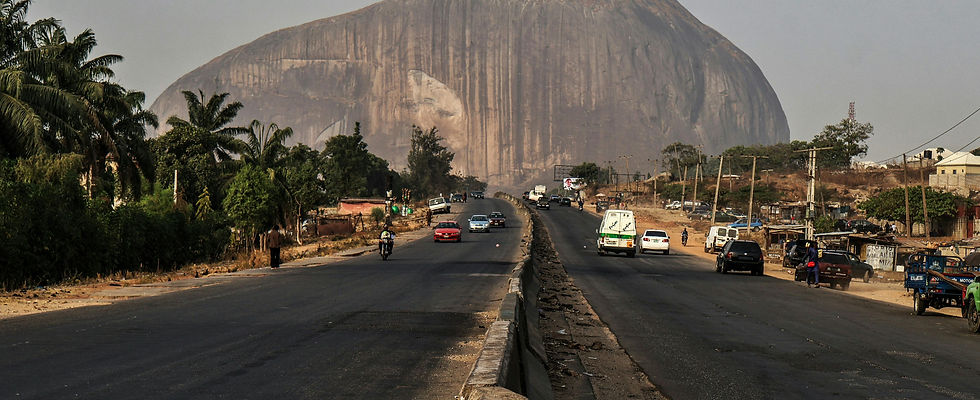
Approximately 80 kilometres north of Abuja — a massive inselberg rising 725 metres from the surrounding plains, its face bearing a remarkable natural feature resembling a human face. One of the most striking natural landmarks in Nigeria.
Jabi Lake & Waterfront
A pleasant artificial lake in the Jabi district — the surrounding waterfront of restaurants, cafes, and leisure facilities has become one of Abuja's most popular and cosmopolitan social destinations, particularly in the evenings.
Wuse Market
Abuja's largest and most vibrant market — a colourful and energetic commercial hub offering produce, textiles, crafts, and everyday goods from across Nigeria. A more manageable market experience than Lagos for first-time visitors.
WEATHER
What to expect throughout the year
Abuja has a tropical wet and dry climate, though its inland location gives it slightly cooler and less humid conditions than Lagos. The dry season from November to March offers the most comfortable conditions for training and outdoor exploration.
Season
Temperature
Notes
Dry season (Nov–Mar)
18°C – 35°C
Drier and cooler than Lagos. Harmattan winds from December to February bring dust haze. The finest season for training and city exploration.
Rainy season (Apr–Oct)
22°C – 30°C
Warm with regular rain. Cooler than Lagos. A compact umbrella is advisable. Training continues normally indoors throughout.