


Cairo, Egypt
The greatest city in Africa and the Arab world — Cairo is a metropolis of extraordinary historical depth, intellectual vitality, and growing commercial significance, sitting at the crossroads of Africa, the Middle East, and the Mediterranean with a civilisation stretching back over five thousand years.

WHY CAIRO
Where civilisation was born
Cairo is the political, cultural, and intellectual capital of the Arab world — a city of over 20 million people that has shaped the course of human civilisation for five millennia. As the largest city in Africa and the Middle East, Cairo offers professionals a training environment of unparalleled historical resonance, a rapidly growing modern economy, and a strategic position at the junction of three continents that makes it one of the most geopolitically significant cities on earth.
Arab world's largest economy
Egypt is the Arab world's most populous nation and one of its largest economies — a major centre for finance, industry, media, and professional services, with the Cairo financial district anchoring a rapidly growing modern business sector.
Excellent connectivity
Cairo International Airport (CAI) offers direct flights from Dubai, Riyadh, Doha, Nairobi, Lagos, Accra, Addis Ababa, London, and virtually every major city across Africa and the GCC via EgyptAir and international carriers.
Arab world's cultural capital
The seat of Al-Azhar University — the oldest continuously operating university in the world— and the undisputed centre of Arabic language, literature, media, and intellectual life across the Arab world and beyond.
Excellent value
Cairo offers world-class training facilities, international hotels, and professional services at a significantly lower cost than European or GCC destinations — one of the most affordable major city training destinations in the portfolio.

CULTURE & ATTRACTIONS
Beyond the classroom
Cairo offers delegates an after-hours experience of unrivalled historical and cultural depth — the custodian of the most extraordinary collection of ancient monuments on earth, combined with a living Islamic heritage and a vibrant contemporary city culture that together make it one of the most extraordinary cities to explore anywhere in the world.
Attraction
What to expect
The Pyramids of Giza &
the Sphinx
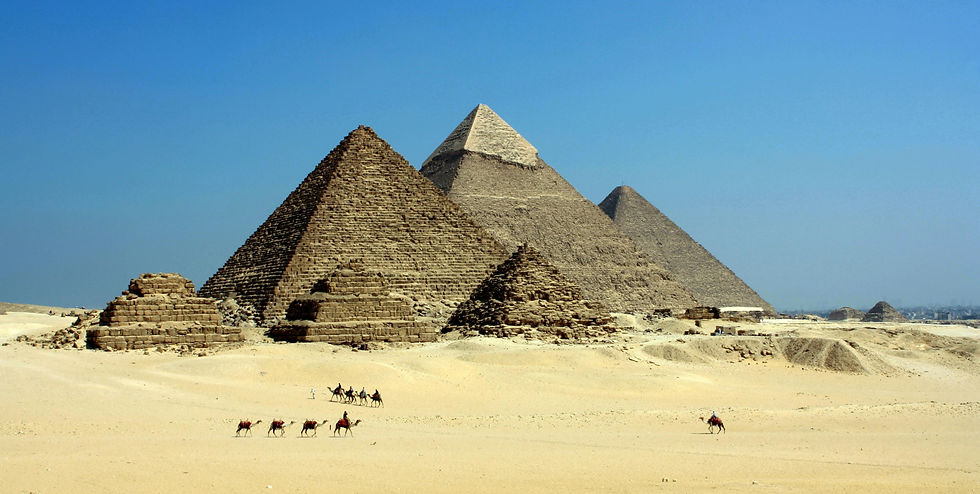
The only surviving wonder of the ancient world — the Great Pyramid of Khufu, the Pyramid of Khafre, and the Great Sphinx stand on the Giza plateau at the edge of the city. One of the most profound and awe-inspiring human experiences available to any delegate in the portfolio.
Grand Egyptian Museum
(GEM)
The world's largest archaeological museum near Giza — houses the complete treasures of Tutankhamun, thousands of royal mummies, and the most significant collection of ancient Egyptian artefacts ever assembled in a single location.
Islamic Cairo & Al-Azhar
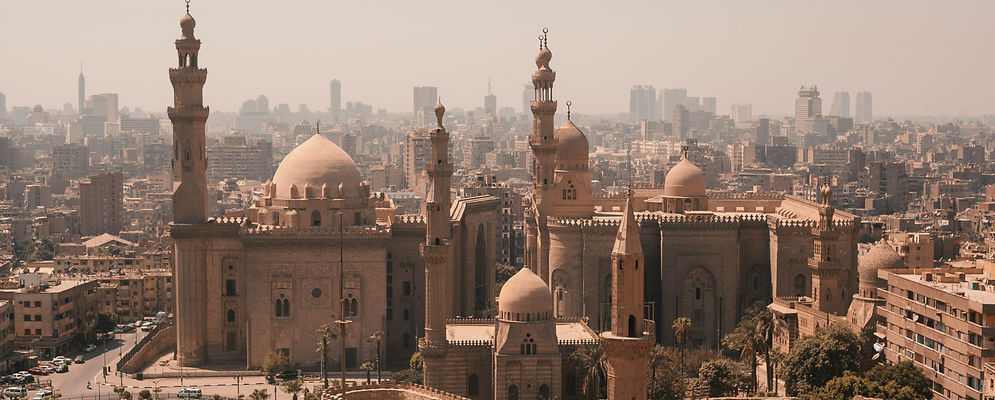
A UNESCO World Heritage Site — the medieval Islamic quarter of Cairo, with its magnificent mosques, madrasas, and caravanserais. Al-Azhar Mosque, founded in 970 AD, is the spiritual heart of Sunni Islam and one of the most significant Islamic institutions in the world.
Khan el-Khalili Bazaar
One of the oldest and most celebrated markets in the Arab world — a vast medieval souk of narrow lanes filled with copper, spices, perfumes, jewellery, and textiles, operating continuously since the 14th century.
The Nile Corniche
Cairo's celebrated riverfront promenade along the world's longest river — a lively waterfront of bridges, gardens, and river views that comes alive in the evenings and offers one of the most pleasant walks in any African city.
Coptic Cairo
The ancient Christian quarter of Old Cairo — home to the Hanging Church (one of the oldest churches in Egypt), the Coptic Museum, and the cave where the Holy Family is believed to have sheltered during the Flight into Egypt.
Cairo Citadel &
Mohammed Ali Mosque
The medieval fortified citadel above Islamic Cairo — commanding panoramic views across the city, and home to the magnificent Mohammed Ali Mosque (the Alabaster Mosque), one of the most important Islamic monuments in Egypt.
Saqqara & Memphis
(excursion)
Approximately 30 kilometres south of Cairo — the Step Pyramid of Djoser (the world's oldest stone monument), the ancient capital of Memphis, and the Dahshur pyramids together form one of the most remarkable archaeological landscapes on earth.
WEATHER
What to expect throughout the year
Cairo has a hot desert climate — warm, dry, and sunny year-round with almost no rainfall. Summers are very hot; winters are mild and pleasant. The cooler months from October to April are the most comfortable for training and outdoor exploration. All venues are comprehensively air-conditioned year-round.
Season
Temperature
Notes
Notes
Winter (Nov–Feb)
10°C – 22°C
Mild and pleasant. The finest season for training and exploration of the ancient sites. Occasionally cool at night — a light layer advisable.
Spring (Mar–May
18°C – 32°C
Warming quickly. Occasional khamsin dust storms possible in April. Still generally pleasant for training.
Summer (Jun–Sep
28°C – 40°C
Very hot and dry. All venues air-conditioned. Outdoor ancient sites best visited at dawn before the heat intensifies.
Autumn (Oct)
18°C – 32°C
Cooling rapidly. Very pleasant by late October. An excellent shoulder season for combining training with site visits.
Dress Code Guidance
Recommended Attire
Context
Training sessions
Smart business or casual attire. Cairo's professional culture is formal — delegates are encouraged to dress smartly. Venues are strongly air-conditioned; a light layer is advisable for indoor sessions throughout the year.
City Exploration
Light, breathable clothing recommended outside the cooler winter months. Comfortable walking shoes essential for the ancient sites and Islamic quarter's uneven stone streets. Modest dress respectful throughout the city. Sun protection strongly advisable year-round.
GETTING AROUND
Navigating the city
Cairo is a vast city best navigated by taxi or ride-hailing for most journeys. The Cairo Metro provides a fast and practical option for key routes. Traffic congestion during peak hours can be very significant — delegates are advised to allow additional travel time.
Mode
Deatils
Cairo Metro
Three lines covering key corridors through the city. Fast, affordable, and air-conditioned — the most reliable way to travel through central Cairo during peak hours. Runs approximately 05:30 to midnight daily.
Airport connections
Cairo International Airport (CAI) is approximately 20 kilometres northeast of the city centre — approximately 30-60 minutes by taxi or Uber depending on traffic. Taxis and ride-hailing services are available at the arrivals hall. Most major hotels offer private transfer services
Taxis & ride-hailing
Uber and Careem are the most practical options for delegates in Cairo. Both operate extensively throughout the city. Ride-hailing is strongly recommended over hailing taxis on the street — reliable, safe, and with fixed pricing.
Car hire & private
driver
Hiring a car with a driver is a very practical option for visiting the Pyramids, Saqqara, and other sites outside the city centre. A full-day private driver is generally affordable in Cairo and significantly reduces the stress of navigating routes to the ancient sites.
Walking
Islamic Cairo, Coptic Cairo, and Downtown are rewarding to explore on foot during the cooler months. The Nile Corniche is a pleasant evening promenade year-round, particularly enjoyable from October through April.

PRACTICAL INFORMATION
Before you arrive
Key practical details to help delegates from across the GCC, Africa, and Asia prepare for a comfortable and productive visit to Cairo.
Topic
Information
Currency
Egyptian Pound (EGP). Card payments accepted at major hotels, shopping centres, and established restaurants. Carrying cash is advisable for markets, local transport, smaller establishments, and site entrance fees. ATMs available at the airport, major hotels, and throughout the city centre.
Time Zone
EET (UTC+2) year-round — Egypt does not observe daylight saving time. Cairo is 1 hour behind Riyadh, 2 hours behind Dubai, 1 hour behind Nairobi, and 2 hours ahead of London in winter.
Electricity
Type C and F plugs (two round pins), 220V / 50Hz. Delegates from the GCC, Africa, and Asia will require a European-style adaptor. UK delegates will also require an adaptor. Available at Cairo Airport and throughout the city.
Halal Dining
As a Muslim-majority city, halal food is the standard across virtually all of Cairo's restaurants. Traditional Egyptian, Levantine, and international cuisines are all widely available in halal-certified establishments throughout the city and near all major training venues.
Places of Worship
Mosques are found throughout Cairo — the call to prayer is heard five times daily. A Qibla direction indicator is available on request at most international hotels. Muslim delegates are advised that the Muslim Pro app provides accurate prayer times and Qibla direction worldwide. Coptic Christian delegates are exceptionally well served — Egypt has one of the largest Christian communities in the Arab world, with hundreds of Coptic, Catholic, and Protestant churches throughout the city, including the historic Hanging Church in Coptic Cairo.
Language
Arabic is the official language. Egyptian Arabic is the most widely understood dialect across the Arab world. English is widely spoken in hotels, business settings, and tourist areas throughout central Cairo. All training courses are delivered in English.

Ready to train in Cairo?
Browse our full programme of courses and reserve your place today.
