


Dubai, United Arab Emirates
The Middle East's foremost business and training hub — a city that combines world-class infrastructure, extraordinary connectivity, and a deep cultural familiarity for delegates from across the GCC, Africa, and Asia.
WHY DUBAI
The GCC's training capital
Dubai sits at the crossroads of Europe, Africa, and Asia — a city purpose-built for international business. For professionals from Saudi Arabia, Qatar, Oman, Ghana, Uganda, Kenya, and Nigeria, Dubai offers an immediately familiar and highly accessible training environment with no language or cultural adjustment required.
Regional business capital
Home to DIFC, one of the world's leading financial centres, and the regional headquarters of hundreds of global corporations.
Unrivalled connectivity
Dubai International (DXB) is one of the world's busiest airports, with direct flights from virtually every major city across the GCC, Africa, and Asia.
Familiar environment
A Muslim-majority city with world-class halal
dining, mosques at every turn, and a multicultural population that reflects your delegates' backgrounds.
Safe and well-regulated
Consistently rated among the world's safest cities. Excellent infrastructure, reliable transport, and a well-organised urban environment.

CULTURE & ATTRACTIONS
Beyond the classroom
Dubai offers a remarkable range of experiences after training hours — from ancient souks and cultural heritage to record-breaking architecture and pristine desert landscapes, all within easy reach of any training venue.
Attraction
What to expect
Burj Khalifa
The world's tallest building at 828 metres. Observation decks on floors 124 and 148 offer unparalleled panoramic views across the city, desert, and coastline.
Dubai Creek & Al Fahidi
The historic heart of old Dubai. The Al Fahidi Historical Neighbourhood preserves traditional wind-tower architecture and houses the Dubai Museum.
Gold Souk & Spice Souk
Two of the most celebrated traditional markets in the region. The Gold Souk is the largest in the world — a remarkable cultural and commercial experience.
Dubai Frame
A 150-metre architectural landmark connecting old and new Dubai. The glass-floored sky bridge offers spectacular views in both directions.
Palm Jumeirah
The iconic palm-shaped artificial island — one of the world's most ambitious engineering projects and home to some of Dubai's finest hotels and beaches.
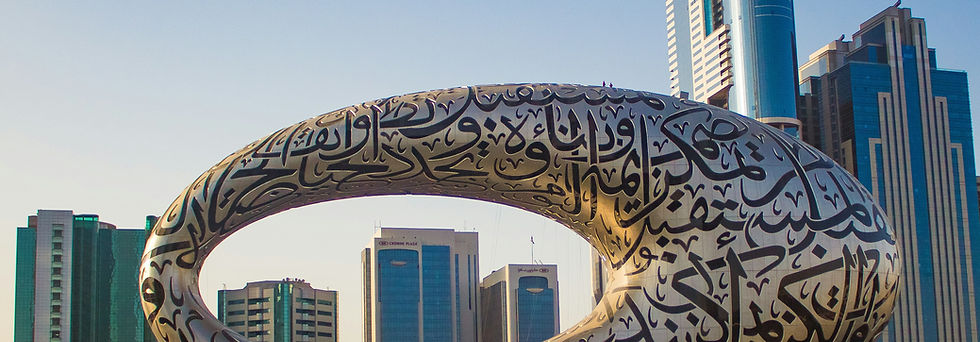
Museum of the Future
One of the most architecturally striking buildings in the world. An immersive experience exploring technology, innovation, and the future of human civilisation.
Desert Safari
A half-day or full-day excursion into the Arabian Desert — dune bashing, camel riding, and a traditional Bedouin camp experience available from central Dubai.
Jumeirah Mosque
One of Dubai's most photographed landmarks and one of the few mosques in the UAE open to non-Muslim visitors. Guided tours available daily.

WEATHER
What to expect throughout the year
Dubai has a hot desert climate with year-round sunshine. The cooler months from October to April are the most comfortable and are the peak training season. Summer months are extremely hot, but all indoor venues are fully air-conditioned.
Season
Temperature
Notes
Notes
Winter (Nov–Mar)
18°C – 26°C
Ideal conditions. Warm, sunny, and pleasant. The best season for outdoor exploration alongside training.
Spring (Apr–May)
25°C – 35°C
Warming quickly. Still comfortable in the mornings. Outdoor activities are best planned for early morning or evening.
Summer (Jun–Sep)
35°C – 45°C
Very hot and humid. All training venues and public spaces are fully air-conditioned. Outdoor activity is limited to early morning.
Autumn (Oct)
28°C – 38°C
Cooling gradually. Very pleasant conditions return by late October. A good shoulder season for training.
Dress Code Guidance
Recommended Attire
Context
Training sessions
Smart business or casual attire. Venues are strongly air-conditioned — a light jacket or layer is advisable for indoor sessions, particularly during summer.
Outdoor exploration
Light, breathable clothing recommended outside of the cooler winter months. Modest dress is respectful in public areas, souks, and cultural sites. Comfortable footwear essential.

GETTING AROUND
Navigating the city
Dubai has a modern, clean, and well-connected public transport system. The Metro is the fastest and most economical way to travel between key districts, whilst taxis and ride-hailing apps are readily available throughout the city.
Mode
Deatils
Dubai Metro
Two lines — the Red Line and Green Line — covering major business districts, malls, and attractions. Runs ~05:30 to midnight (until 01:00 on Fridays). A Nol card is the most convenient payment method, available at all stations.
Airport connections
Dubai International (DXB): Metro Red Line connects directly — Terminal 1 and Terminal 3 have dedicated Metro stations. Journey to central Dubai approximately 25–30 minutes. Al Maktoum International (DWC) is served by taxis and private transfers.
Taxis & ride-hailing
Dubai taxis are metered, clean, and very widely available. Uber and Careem both operate extensively. Taxis are generally preferred for journeys not covered by the Metro, particularly between hotels and training venues.
Bus network
An extensive bus network covers areas not served by the Metro. All buses accept the Nol card. Air-conditioned bus shelters are available at major stops — a practical consideration given the summer heat.
Dubai Ferry & Water
Taxi
The traditional abra (wooden water taxi) crossing Dubai Creek between Deira and Bur Dubai is both practical and a memorable cultural experience. Modern water taxis also operate along the Creek and Marina waterways.

PRACTICAL INFORMATION
Before you arrive
Key practical details to help delegates from across Africa, Asia, and beyond prepare for a comfortable and productive visit to Doha.
Topic
Information
Currency
UAE Dirham (AED). Contactless card payments are accepted almost universally. ATMs are available at the airport, malls, and throughout the city.
Time Zone
GST (UTC+4) year-round — Dubai does not observe daylight saving time. Dubai is 1 hour ahead of Riyadh, 3 hours ahead of Nairobi, and 3 hours ahead of London (4 hours in summer).
Electricity
Type G plug (three rectangular pins — same as the UK), 220–240V / 50Hz. Delegates from the UK will find their plugs fully compatible. GCC and African delegates will require a UAE/UK adaptor.
Halal Dining
As a Muslim-majority city, halal food is the standard across Dubai. Virtually all restaurants serve halal-certified food. Non-halal options are available in licensed hotel establishments.
Places of Worship
Mosques are located throughout Dubai. A Qibla direction indicator is available on request at most international hotels. Muslim delegates are advised that the Muslim Pro app provides accurate prayer times and Qibla direction worldwide. Christian delegates are equally well served — Dubai has numerous churches including St Mary's Catholic Church and the Dubai City Church, open to all denominations.
Cultural
Considerations
Dubai is welcoming and cosmopolitan. During Ramadan, eating and drinking in public during daylight hours should be avoided out of respect. Dress modestly in public areas.

Ready to train in Dubai ?
Browse our full programme of courses and reserve your place today.
